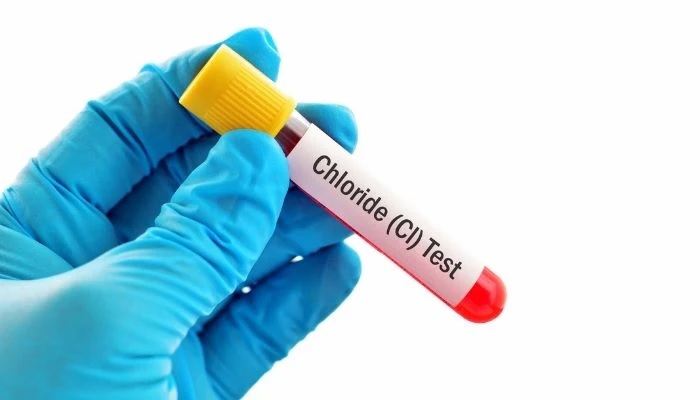
Usually, when we think of blood tests, we opt for sugar, cholesterol, or thyroid panels. During fever seasons, we provide samples to diagnose Dengue, Malaria, or Typhoid. But have you ever had a chloride blood test? Are you wondering what kind of test it is or what its benefits are? Let’s take a look.
What is Chloride?
Just like potassium, sodium, and calcium, chloride is an electrolyte. It is one of the essential minerals our body needs. Dissolved in water, it helps maintain the balance of body fluids, including the pH level of the blood. It also ensures that blood pressure and blood volume remain at appropriate levels.
Why is this test done?
A chloride blood test (or serum chloride test) is performed to check the level of chloride in the blood. This test is typically conducted when a person suffers from vomiting, diarrhea, or dehydration, or to monitor the function of the kidneys and adrenal glands. Additionally, it is necessary to get a chloride test if you experience high blood pressure, hyperhidrosis (excessive sweating), muscle weakness, breathing problems, fatigue, or muscle cramps.
What are the Normal Ranges?
Chloride levels should generally be:
- Adults: 96 to 106 mEq/L
- Children: 95 to 108 mEq/L
- Newborns: 96 to 113 mEq/L
If chloride levels are higher or lower than these ranges, it indicates an underlying health issue. In such cases, you should consult a doctor immediately. To identify the cause of the fluctuation, the doctor may perform further tests to diagnose the condition and provide treatment.
Health Issues Caused by Low Chloride Levels:
- Bartter Syndrome: When kidneys cannot reabsorb salt and other electrolytes.
- Addison’s Disease: Insufficient levels of cortisol or aldosterone hormones from the adrenal gland.
- Congestive Heart Failure: When the heart cannot pump enough blood to meet the body’s needs.
- Cushing’s Syndrome: Overproduction of cortisol due to adrenal gland defects.
- Fatigue/Weakness.
- Hyperhidrosis: Excessive sweating.
- Hyperaldosteronism: Overproduction of aldosterone due to damaged adrenal glands.
- Metabolic Alkalosis: When the blood pH level is higher than normal.
- Respiratory Acidosis: When the blood becomes too acidic because the lungs cannot fully expel carbon dioxide.
- SIADH: Excessive water retention in the body.
Health Issues Caused by High Chloride Levels:
- Kidney Disease.
- Ethylene Glycol Poisoning.
- Ketoacidosis (increase of acids in the blood).
- Lactic Acidosis (increase of lactic acid in the blood).
- Metabolic Acidosis (buildup of acids due to kidney disease or failure).
- Methanol Poisoning.
- Distal or Proximal Renal Tubular Acidosis.
- Respiratory Alkalosis (low carbon dioxide levels due to hyperventilation).
- Salicylate Toxicity (such as an aspirin overdose).
- Carbonic Anhydrase Inhibitors (increased chloride levels due to medications used for glaucoma treatment).
Note: This article is for general informational purpose only. For medical advice or a diagnosis, consult a health professional.
Share this:
- Click to share on WhatsApp (Opens in new window) WhatsApp
- Click to share on Facebook (Opens in new window) Facebook
- Click to share on X (Opens in new window) X
- Click to share on LinkedIn (Opens in new window) LinkedIn
- Click to share on Telegram (Opens in new window) Telegram
- Click to print (Opens in new window) Print
- Click to share on Tumblr (Opens in new window) Tumblr