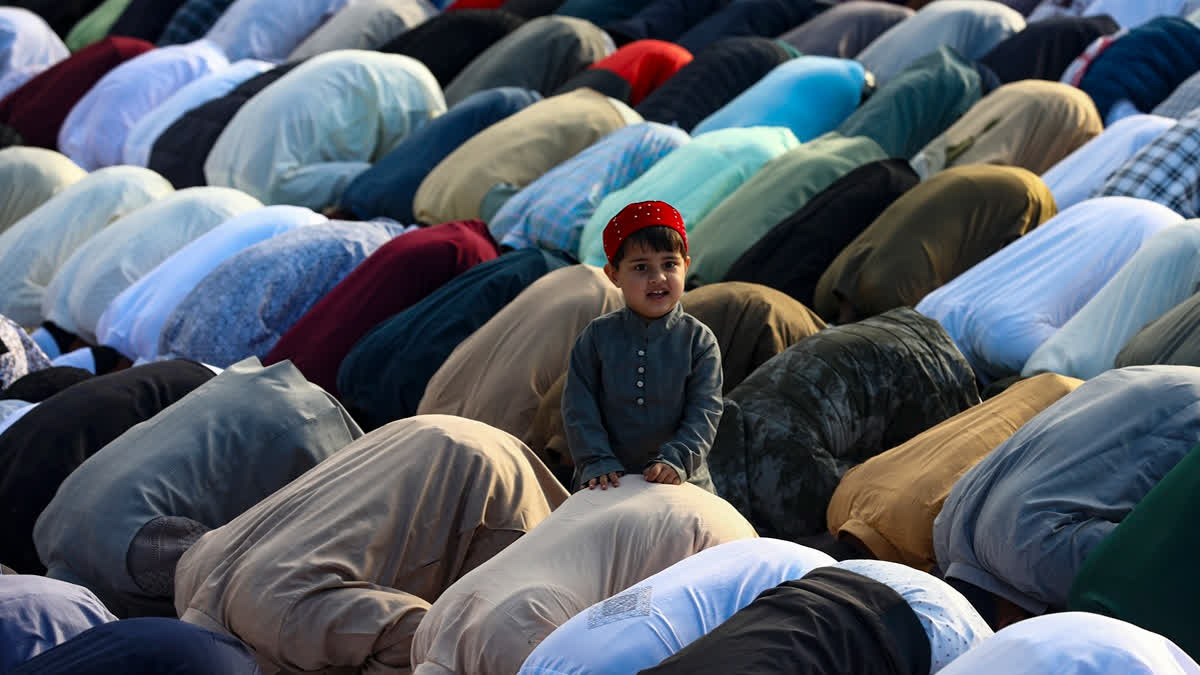
New Delhi, March 21: Muslims across the world including India have come together to celebrate the festival of Eid-ul-Fitr, the conclusion of the holy month of Ramadan, with prayers, greetings and festive cheer on Saturday.
Ramadan, the ninth month of the Islamic lunar calendar, is considered one of the most sacred periods in Islam. It commemorates the revelation of the Holy Book, the Quran, to Prophet Muhammad through the angel Gabriel. During this month, Muslims observe fasting from dawn to dusk, engage in increased prayer, and focus on spiritual reflection and self-discipline.
Eid-ul-Fitr, often referred to as the “festival of breaking the fast”, marks the end of this month-long period of devotion and fasting. The festival falls on the first day of Shawwal, the tenth month of the Islamic calendar, following the sighting of the crescent moon.
Extended his heartiest greetings to the nation on the auspicious occasion, Prime Minister Narendra Modi said, “Best wishes on Eid-ul-Fitr. May this day further brotherhood and kindness all around. May everyone be happy and healthy.”
In another message, the Prime Minister extended warm greetings to people on Nauroz and said, “Praying for a year filled with prosperity and joy. May everyone be healthy and may all aspirations be realised. Navroz Mubarak!”
On Friday, President Droupadi Murmu greeted people on the eve of Eid-ul-Fitr, and urged all to resolve to promote unity and harmony in society and contribute to the nation’s progress.
Eid-ul-Fitr begins with a special congregational prayer held shortly after sunrise. Unlike daily prayers, this prayer does not include the traditional call to prayer and features additional recitations praising God. Before attending the prayer, Muslims are required to give charity, ensuring that those in need can also participate in the celebrations.
It is customary to eat something, often dates, before heading for the prayers and to wear new or their finest clothes, reflecting the joyous nature of the occasion.Eid-ul-Fitr is one of the two major festivals in Islam, the other being Eid al-Adha. The day is marked by both formal and informal celebrations, including community gatherings, visits to relatives, and the exchange of greetings and gifts. Families come together to share festive meals, while children often receive presents and money, adding to the celebratory atmosphere.
While Eid is officially observed for one day, festivities in many countries extend for up to three days, often accompanied by public holidays. These days provide an opportunity for people to rest, reconnect with loved ones, and celebrate the successful completion of Ramadan. In several nations, governments have declared multiple days off to allow citizens to fully partake in the festivities.
Despite the joy associated with Eid, cebrations in parts of West Asia remain muted this year due to the ongoing conflict, casting a shadow over the festive spirit. Several countries have announced extended public holidays of up to four days to mark the occasion. Many families are observing the festival in a restrained manner, keeping in mind the difficult circumstances faced by communities impacted by conflict.
Historically, Eid-ul-Fitr was established by Prophet Muhammad in 624 CE in Madinah, following the completion of the first Ramadan fast after the migration (Hijra). Upon arriving in Madinah, he found people celebrating certain days with festivities and later designated Eid-ul-Fitr and Eid al-Adha as the two official Islamic festivals. Beyond celebrations, Eid-ul-Fitr carries deep spiritual significance. The festival is a time for expressing gratitude to Allah for the strength to complete the fast and for the blessings received, and also emphasises compassion, encouraging people to remember and support those less fortunate.
Share this:
- Click to share on WhatsApp (Opens in new window) WhatsApp
- Click to share on Facebook (Opens in new window) Facebook
- Click to share on X (Opens in new window) X
- Click to share on LinkedIn (Opens in new window) LinkedIn
- Click to share on Telegram (Opens in new window) Telegram
- Click to print (Opens in new window) Print
- Click to share on Tumblr (Opens in new window) Tumblr