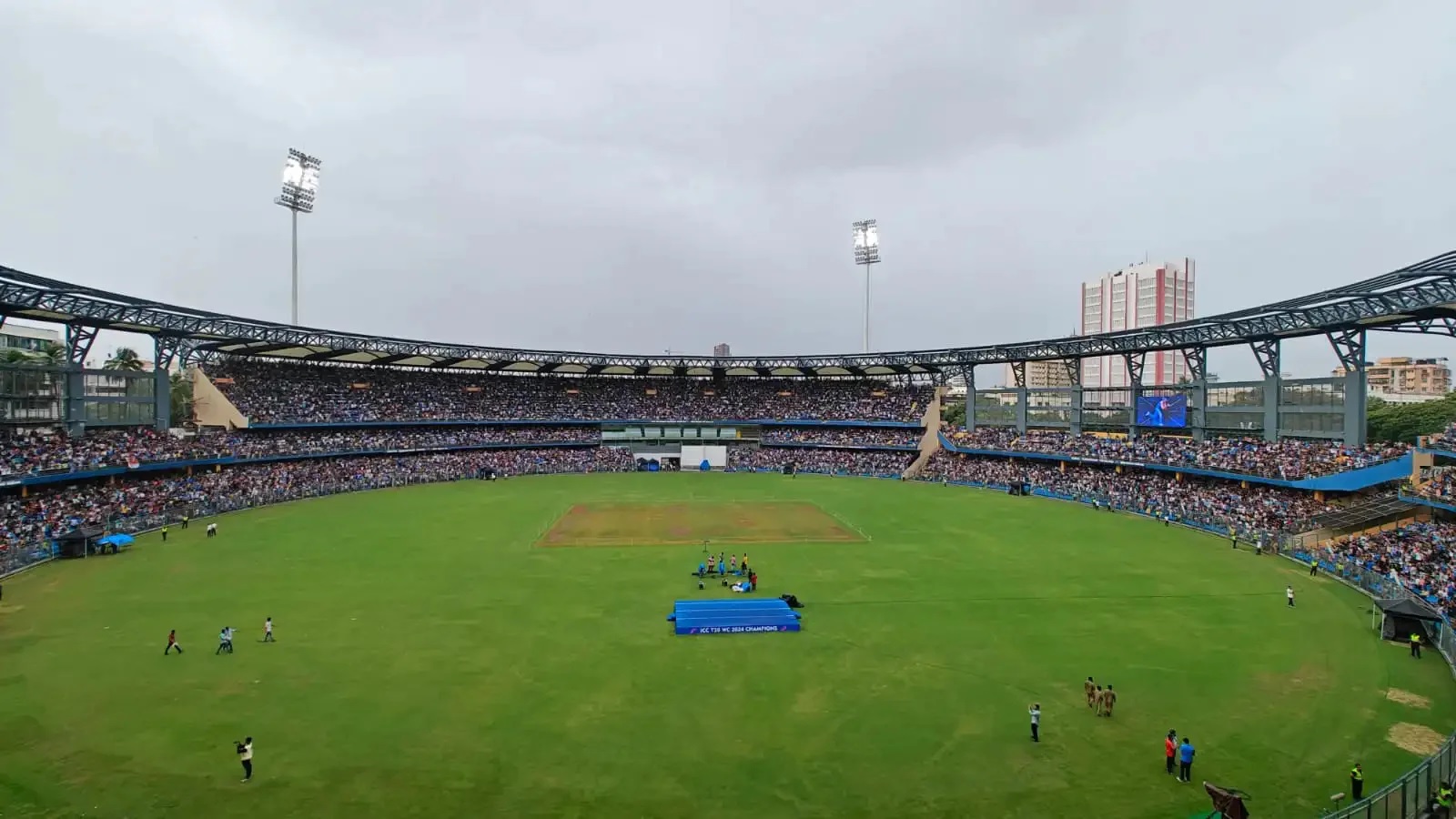
Mumbai, March 5: A highly anticipated T20 World Cup 2026 showdown awaits as India and England prepare to square off at the Wankhede Stadium in Mumbai on Thursday. India enter the match on the back of a morale-boosting victory against the West Indies in the Super 8s, while England have grown stronger after overcoming a few early hiccups in the campaign. The Wankhede Stadium, as it traditionally does, is expected to favour the batting unit more than the bowling unit. However, a few concerns remain.
The pitch at Wankhede has a green tinge, deliberately maintained to lock in moisture ahead of the semi-final. This is primarily because it is a red-soil pitch, and the grass helps retain moisture, preventing the surface from drying out too quickly.
Early in the game, pacers should benefit from seam movement and extra bounce thanks to the grass and the red soil’s natural characteristics – consistent bounce and some carry. Fast bowlers could trouble the openers in the powerplay with movement off the seam.
As the match progresses into the middle overs, the surface may settle, allowing spinners to find grip and turn – especially if the grass wears down or the pitch roughens slightly.
Overall, though, it remains a batting-friendly track at heart. Totals in excess of 200 are on the cards, but dew is likely to play a significant role later in the game.
India’s bowling coach, Morne Morkel, also expressed concern about the potential impact of dew. He said:
“I think dew is always a big concern. But that’s again something you can’t control: the toss. I think at Wankhede there’s always that extra bit of bounce.”
“Guys can trust the bounce and play through the line, which can also, as a bowler, bring you into the game. I just feel the margins here are a lot smaller. The ball travels; it’s quite a small ground,” he explained.
“So you just need to keep fighting through each over, staying in the moment and competing for every ball. Because, as I said, a batter’s strength can also be his weakness on this surface. Sometimes it’s better not to go too defensive but to keep attacking, as opportunities can arise,” Morkel added.
Share this:
- Click to share on WhatsApp (Opens in new window) WhatsApp
- Click to share on Facebook (Opens in new window) Facebook
- Click to share on X (Opens in new window) X
- Click to share on LinkedIn (Opens in new window) LinkedIn
- Click to share on Telegram (Opens in new window) Telegram
- Click to print (Opens in new window) Print
- Click to share on Tumblr (Opens in new window) Tumblr