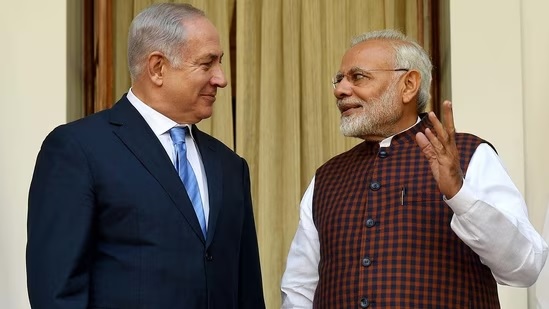
Tel Aviv, Feb 25: As Prime Minister Narendra Modi prepares to emplane for Israel for his second visit to the country, a larger question hangs in the air: is New Delhi being drawn into a new regional axis? Israeli Prime Minister Benjamin Netanyahu has unveiled a plan to build what he calls a “hexagon” of alliances in and around the Middle East, naming India among key partners.
The proposal came days before Prime Minister Narendra Modi begins his two-day visit from February 25 to 26, during which he is scheduled to address the Knesset and hold talks on technology, trade and security cooperation.
What is the ‘hexagon’ plan?
Speaking at the start of the weekly cabinet meeting, Netanyahu described India as a “global power” and Modi as a “personal” friend, saying, “We will create an entire system, essentially a ‘hexagon’ of alliances around or within the Middle East.”
He specified that this would include “India, Arab nations, African nations, Mediterranean nations (Greece and Cyprus), and nations in Asia that I won’t detail at the moment,” adding, “I will present this in an organised manner.”
He argued that the aim is to build “an axis of nations that see eye-to-eye on the reality, challenges, and goals against the radical axes, both the radical Shia axis, which we have struck very hard, and the emerging radical Sunni axis.”
According to Netanyahu, all of these nations share a different perception, and their cooperation can yield great results and, of course, ensure their resilience and their future.
While the description broadly aligns with the connectivity vision of the India-Middle East-Europe Economic Corridor (IMEC), Netanyahu presented it as a strategic and diplomatic alignment rather than only an economic corridor.
No formal endorsement yet
As Netanyahu glorified his plan, no government named by him has publicly endorsed the proposal or its sectarian framing, yet.
In fact, two of the countries he mentioned — Greece and Cyprus — are members of the International Criminal Court, which has issued an arrest warrant against Netanyahu over alleged war crimes in Gaza. As ICC members, they would be legally obligated to act on that warrant were he to enter their territory.
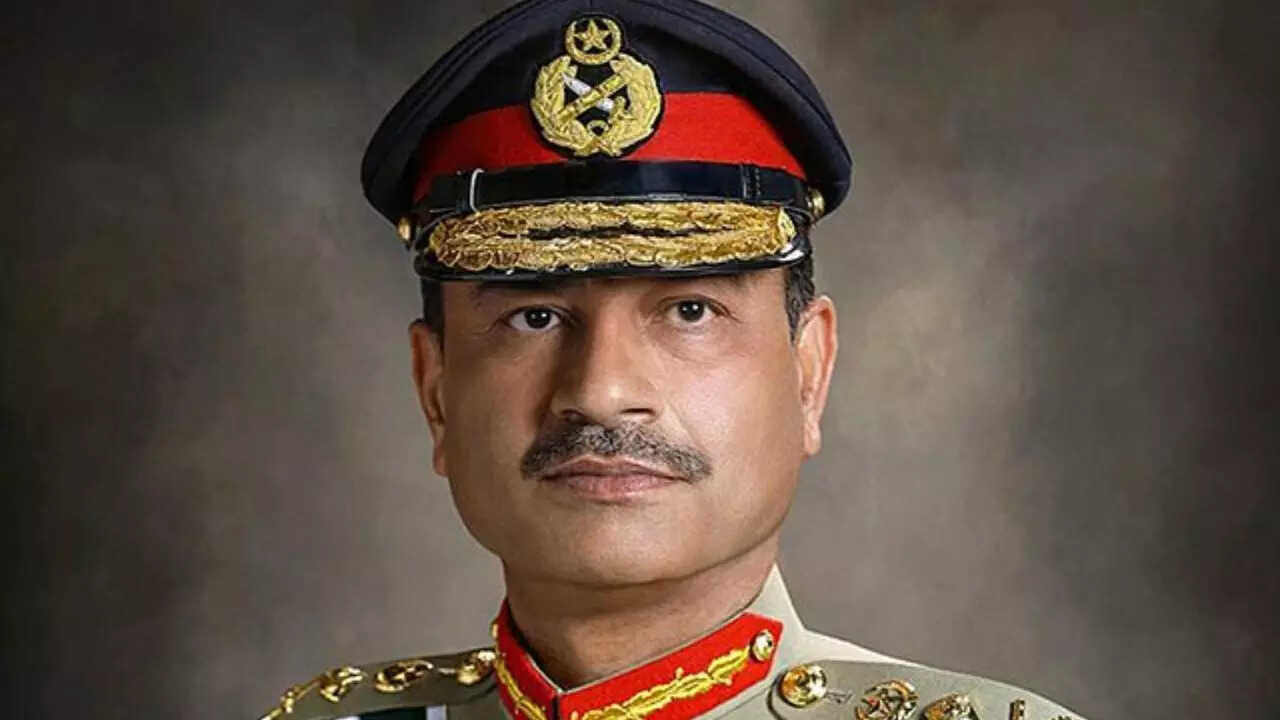
Netanyahu’s remarks have also drawn criticism in the region. Pakistan’s Senate passed a resolution condemning Israel’s plan to forge what it described as alliances targeting certain countries, reported news agency PTI.
The resolution, moved by Senator Palwasha Khan of the Pakistan Peoples Party, denounced “continued provocative steps and statements by the Israeli leadership that threatened the regional and international peace and stability, including the latest statement about forming alliances.”
It also condemned what it called Israel’s “blatant disregard of international law” and reaffirmed Pakistan’s support for the Palestinian cause.
Will India join the ‘hexagon’?
How India will ultimately respond remains to be seen. Historically, however, New Delhi has avoided joining rigid geopolitical blocs, maintaining simultaneous engagement with major powers including the US, Russia and China, while also nurturing strong ties across West Asia.
On the other hand, India’s longstanding relations with Iran also creates a hurdle. The Gulf region is also economically significant, with millions of Indian workers sending back substantial remittances.
Talking about the probablity of India joining, Andreas Krieg, associate professor of security studies at King’s College London, told Al Jazeera that Netanyahu’s proposed alliance “risks hardening regional polarisation, giving Israel’s rivals (Iran, but also Turkiye and others) an easy narrative of encirclement, and making some would-be partners more cautious about being seen too close to Israel.”
He added that India’s core interests lie in defence, technology and trade rather than in advancing Israel’s regional strategic vision. “The ‘unnamed Arab/African/Asian’ component may exist in the form of ad hoc security coordination and transactional diplomacy, but not necessarily in a way that resembles a NATO-style pact or treaty. It isn’t an alliance,” Krieg said.
“I’d treat the ‘hexagon’ less as a deliverable alliance and more as a branding exercise for a patchwork of existing relationships,” he added.
What’s on Modi’s agenda?
During Modi’s visit, the two sides are expected to advance cooperation in high-technology sectors. Netanyahu said they would promote collaboration in “high-tech, AI, and quantum computing.”
Modi is also set to attend an innovation event in Jerusalem, visit Yad Vashem with Netanyahu, and meet Israeli President Isaac Herzog.
Netanyahu underlined that bilateral ties have deepened steadily since Modi’s 2017 visit — the first by an Indian prime minister to Israel — followed by Netanyahu’s 2018 trip to India. “In any case, one thing has happened: The fabric of this relationship has grown tighter, and he is coming here so we can tighten it further through a series of decisions related to strengthening cooperation between our governments and countries,” he said, noting that this includes “economic, diplomatic and security cooperation.”