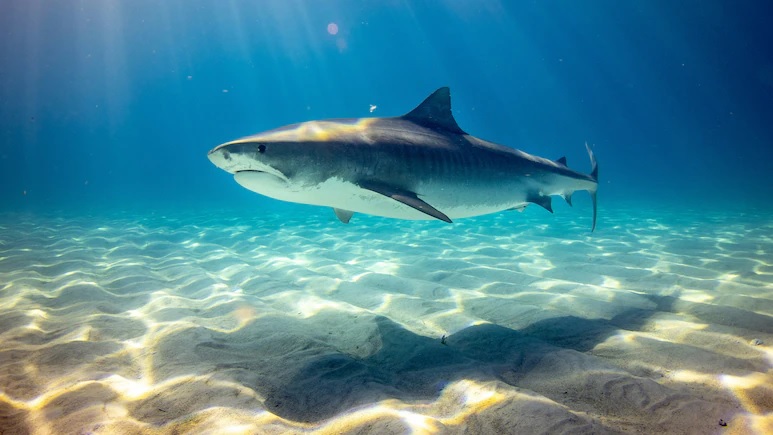
Caffeine, cocaine, and painkillers, among other drugs, have been detected in the blood of sharks swimming near the coast of the Bahamas, a new study has found. Led by biologist Natascha Wosnick, the researchers analysed blood samples from 85 sharks near Eleuthera Island, with nearly a third of them testing positive for substances including caffeine, anti-inflammatory drugs like acetaminophen and diclofenac, and in one case, cocaine.
“This represents the first report concerning contaminants of emerging concern (CEC) and potentially associated physiological responses in sharks from The Bahamas, pointing to the urgent need to address marine pollution in ecosystems often perceived as pristine,” the study published in the journal Environmental Pollution highlighted.
Wosnick, a biologist with the Federal University of Parana, stated that currents could carry the drug traces from sewage or other sources, but divers were the most likely culprits for sharks ingesting these harmful chemicals. Majority of the sharks tested for the study were found around an inactive fish farm popular with divers.
“It’s mostly because people are going there, peeing in the water and dumping their sewage in the water,” Wosnick was quoted as saying by ScienceNews.
“They bite things to investigate and end up exposed [to substances],” added Wosnick.
Apart from the detection of pharmaceuticals and cocaine, the researchers also found changes in metabolic markers in sharks. It remains unclear at this stage if the shifts are harmful, but they might impact their behaviour.
“The very limited information on how CECs interact with the unique physiology and detoxification systems of elasmobranchs (sharks) represents a major barrier to assessing ecological risks and population-level impacts, hindering the development of effective conservation strategies for this already high-at-risk group,” the study authors said.
In a previous research, published in 2024, researchers found cocaine and rare earth elements in sharks off Rio de Janeiro. After dissecting the bodies of 13 sharpnose sharks caught in fishermen’s nets off a beach in Rio, scientists tested all 13 of them positive for the drug.
The concentration found in the Rio sharks was 100 times higher than had been found in other marine animals. Akin to the Bahamas, scientists stated that one of the possible explanations for cocaine’s presence could be attributed to sewage discharges.
Share this:
- Click to share on WhatsApp (Opens in new window) WhatsApp
- Click to share on Facebook (Opens in new window) Facebook
- Click to share on X (Opens in new window) X
- Click to share on LinkedIn (Opens in new window) LinkedIn
- Click to share on Telegram (Opens in new window) Telegram
- Click to print (Opens in new window) Print
- Click to share on Tumblr (Opens in new window) Tumblr