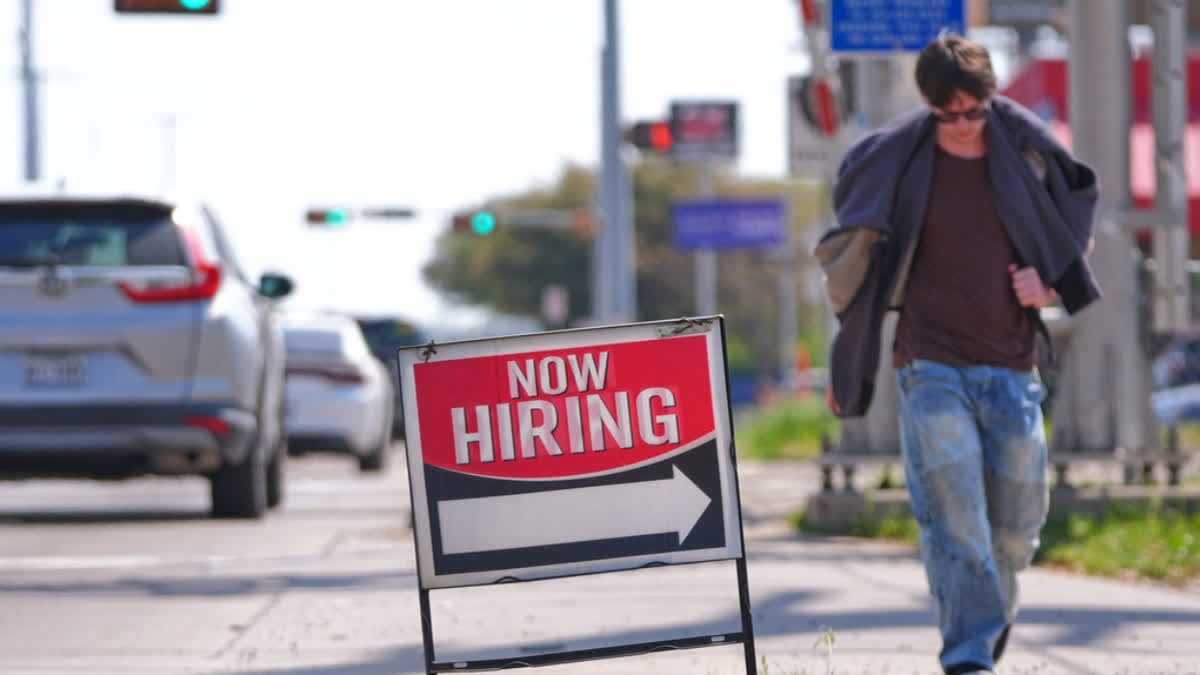
Washington: American employers added a surprisingly strong 178,000 new jobs last month, rebounding from a dismal February. And the unemployment rate dipped to 4.3%. The Labor Department reported Friday that hiring marked a turnaround from the loss of 133,000 jobs in February. The job gains were about three times what economists had forecast. But uncertainty surrounding the war with Iran — and its impact on energy prices — is clouding the outlook for the labor market.
The unemployment rate was down from 4.4% in February. That is partly because the labor force — those working and looking for work — dropped by 396,000 in March so fewer people were competing for jobs. In fact, the percentage of people in the labor force dropped to 61.9% last month, the lowest since November 2021.
Health care companies added 76,400 jobs last month, boosted by the return of 31,000 Kaiser Permanente employees to work after the end of a strike in February. Factories added 15,000 jobs last month but have still shed jobs for 14 of the last 16 months. Construction companies added 26,000 jobs, probably partly because of warmer weather last month.
Average hourly wages were up 0.2% from February. Compared to March 2025, they were up 3.5% — the smallest gain since May 2021 and one consistent with the Federal Reserve’s 2% annual inflation target.
Labor Department revisions shaved 7,000 jobs off combined January and February payrolls. The U.S. job market has been in a slump over the past year. Most economists say the impact of the war and higher energy prices was probably not fully reflected in the March jobs numbers.
“The data is mostly backward-looking, and likely does not incorporate any impact from the recent rise in energy prices, or other risks related to the war in Iran,’’ Thomas Simons, chief U.S. economist with the investment firm Jefferies, wrote in a commentary.
Diane Swonk, chief economist at the accounting firm KPMG, said that the economy is getting a lift from big tax refunds made possible by President Donald Trump’s 2025 tax cuts. “But those are now being eaten up by higher energy costs,’’ she said.
Last year, employers added an average of just 9,700 jobs a month, the weakest hiring outside a recession since 2002. Businesses have been reluctant to bring on new workers partly because of uncertainty arising from President Donald Trump’s tariffs on imports and crackdown on immigration. One measure released by the Labor Department on Monday showed the weakest hiring since April 2020 – in the middle of COVID-19 lockdowns.
But firms have also been reluctant to let go of their existing employees, creating what economists describe as a “no-hire, no-fire’’ scenario that locks young applicants out of the job market. At the same time, there are growing worries that artificial intelligence is taking entry-level jobs.
New jobs are heavily concentrated in health care and social assistance (which includes day care and vocational rehabilitation centers). That combined category accounted for more than half the jobs created last month. The trend reflects an aging U.S. population. A graying Japan saw the same thing in the early 2010s, Vanguard economist Adam Schickling wrote in a commentary ahead of Friday’s jobs report.
Share this:
- Click to share on WhatsApp (Opens in new window) WhatsApp
- Click to share on Facebook (Opens in new window) Facebook
- Click to share on X (Opens in new window) X
- Click to share on LinkedIn (Opens in new window) LinkedIn
- Click to share on Telegram (Opens in new window) Telegram
- Click to print (Opens in new window) Print
- Click to share on Tumblr (Opens in new window) Tumblr