Quetta, Feb 4: Pakistan’s Defence Minister Khawaja Asif has admitted that the country’s security forces were ‘handicapped’ against Baloch rebels amid the fresh surge in militant violence in Balochistan, a province which has been fighting for independence from Islamabad.
His remarks came as a total of 197 Baloch people, including militants from ‘Fitna al-Hindustan’ and other armed groups, were killed in continuing counterterrorism operations in Balochistan over the past three days. Additionally, 22 security personnel have been killed, state media reported on Tuesday.
Speaking in the National Assembly (NA) on the matter, Asif said: “Balochistan constitutes over 40 per cent of Pakistan geographically … to control it is much difficult than a populated city or area and it needs deployment of massive forces. Our troops are deployed there and are in action against them (terrorists), but they are physically handicapped by guarding and patrolling such a big area.”
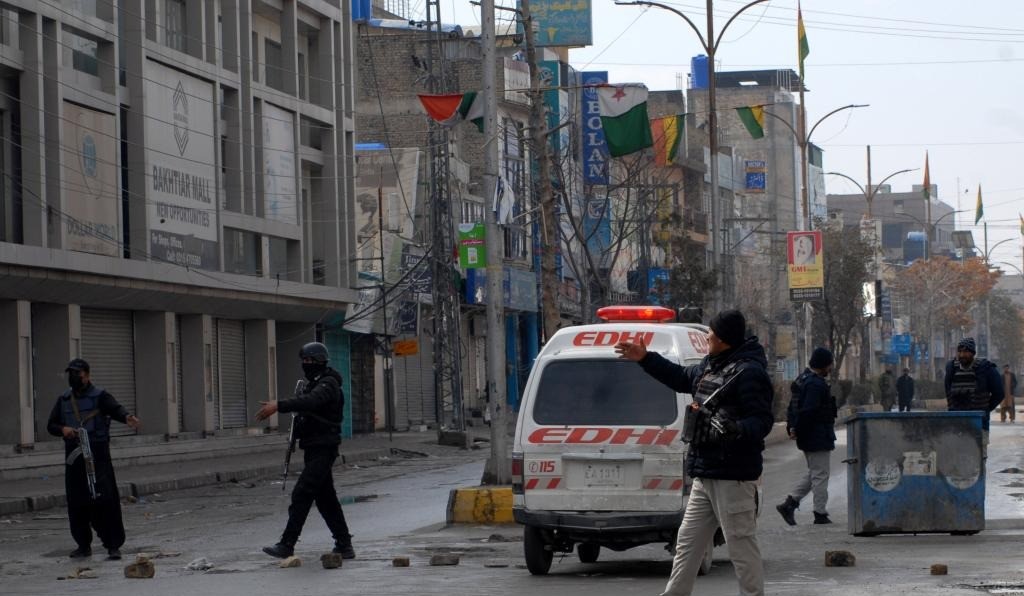
Addressing Pakistan’s National Assembly, Asif described the geographical challenges faced by troops in the country’s largest yet least populated province amid the serious security situation after separatist forces launched coordinated attacks across at least 12 locations, triggering one of the deadliest security crises in recent years. Authorities have said that at least 177 insurgents were killed in sweeping counterterror operations across the province, leading Pakistani daily The Express Tribune reported.
Khawaja Asif has ruled out talks with the rebel group Baloch Liberation Army (BLA) — that took the responsibility for the attacks — saying no negotiations would be held with “terrorists” responsible for killing civilians, including women and children.
He claimed there was a nexus between criminals and the separatist groups, with criminal gangs operating under the banner of BLA — which, according to him, protects smugglers.
“In Balochistan, tribal elders, the bureaucracy, and those running separatist movements have formed a nexus,” he said, claiming that smugglers had previously earned up to 4 billion Pakistani rupees a day from oil smuggling.
This comes as Balochistan continues to fight for separation from Pakistan amid the surge in human rights violations at the hands of security forces against the Baloch people.
The cases of enforced disappearances, extrajudicial killings and fake charges are on the rise in one of the largest provinces in Pakistan.
The defence minister said the government had tightened enforcement to curb smuggling, triggering a major protest at the Chaman border. He added that some people argue that the state should negotiate with nationalist movements, but claimed that the protest movement was driven by commercial interests rather than politics or nationalism.
Meanwhile, Balochistan Chief Minister Sarfraz Bugti described the operation as one of the most extensive intelligence-led actions conducted within such a short timeframe. He said the crackdown followed a series of coordinated assaults claimed by the BLA.
Balochistan, which borders Iran and Afghanistan, has faced a decades-long insurgency led by ethnic Baloch separatists seeking greater autonomy and a larger share of the province’s natural resources.
The Baloch resistance against the Pakistani state began soon after the integration of the princely state of Kalat. Insurgencies were witnessed in 1948, 1958–59, 1962–63, 1973–77, and from the early 2000s to the present.
The province is rich in minerals, natural gas, coal, copper, gold, and strategic ports such as Gwadar. Despite this wealth, Balochistan remains Pakistan’s poorest province, with inadequate roads, hospitals, schools, electricity, and employment opportunities.
Punjab and the federal centre receive the majority of benefits from Balochistan’s resources, leaving the province economically and politically marginalised.
Over the years, separatist groups such as the BLA have targeted security forces, infrastructure, and projects linked to the China-Pakistan Economic Corridor (CPEC). Their focus on Chinese infrastructure, particularly the Gwadar port under the CPEC, reflects the anger among residents against projects considered extractive and non-inclusive.