Bengaluru, March 5: A Bengaluru-based woman Shreya Jha has compared prices across different food delivery apps to figure out which one is most expensive. Her experiment involved the country’s two leading food delivery apps — Swiggy and Zomato — with a newly-launched service called Ownly, which pegs itself as a more affordable alternative with no hidden charges.
Ownly is a standalone delivery app launched by Rapido. The service was officially launched in Bengaluru on March 3. Ownly claims to be a low-commission delivery app with no hidden charges.
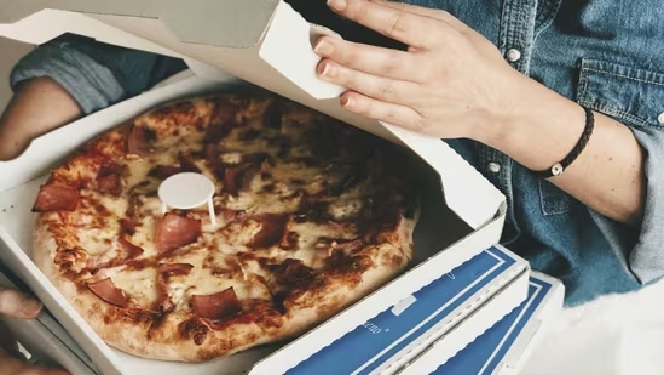
Shreya Jha checked the prices of the same pizza from Pizza Hut across the three apps. Here is what she found while comparing Swiggy, Zomato and Ownly.
On Zomato, a corn pizza costing Rs. 119 had several charges on top, including a restaurant packaging charge of Rs. 25, a delivery partner fee of ₹19, a platform fee of ₹12.50, and a Feeding India donation of Rs. 3.
The total on Zomato for a Rs. 119 pizza came to Rs. 191.37.
On Swiggy, there was a discount of ₹50 on the original price of the pizza. However, a delivery fee of ₹56, along with GST and other charges brought the total cost of delivery to ₹180 — marginally cheaper than Zomato.
“There is a discount of 50 rupees on the original price. Yet I have to pay Rs. 180,” wrote Shreya on X.
Shreya discovered that true to its promise, Ownly had no extraneous charges. A corn pizza from Pizza Hut costing Rs. 119 only had Rs. 5.95 as GST on top.
In the end, the customer could get the pizza delivered for just Rs. 125 — significantly lower than Zomato and Swiggy.
Shreya theorized that the price difference would attract many customers to choose Ownly, but wondered whether it would be sustainable to run a business with no commissions.
“Surely, the price difference will attract a lot of customers but will this be sustainable? Will the differentiating factor collapse?” she asked.
“My sister works for them, they’re still in the growth stage, they’re going to have to do things to scale even if they’re not sustainable,” wrote one X user.
“This will be sustainable depending on volumes. If they get orders in large numbers, they will sustain,” another opined.
“It’s basically the same model which Swiggy, Zomato used initially to capture market low commission and free delivery no markup charges to inculcate habit formation burning money in initial few years,” a user added.
Share this:
- Click to share on WhatsApp (Opens in new window) WhatsApp
- Click to share on Facebook (Opens in new window) Facebook
- Click to share on X (Opens in new window) X
- Click to share on LinkedIn (Opens in new window) LinkedIn
- Click to share on Telegram (Opens in new window) Telegram
- Click to print (Opens in new window) Print
- Click to share on Tumblr (Opens in new window) Tumblr