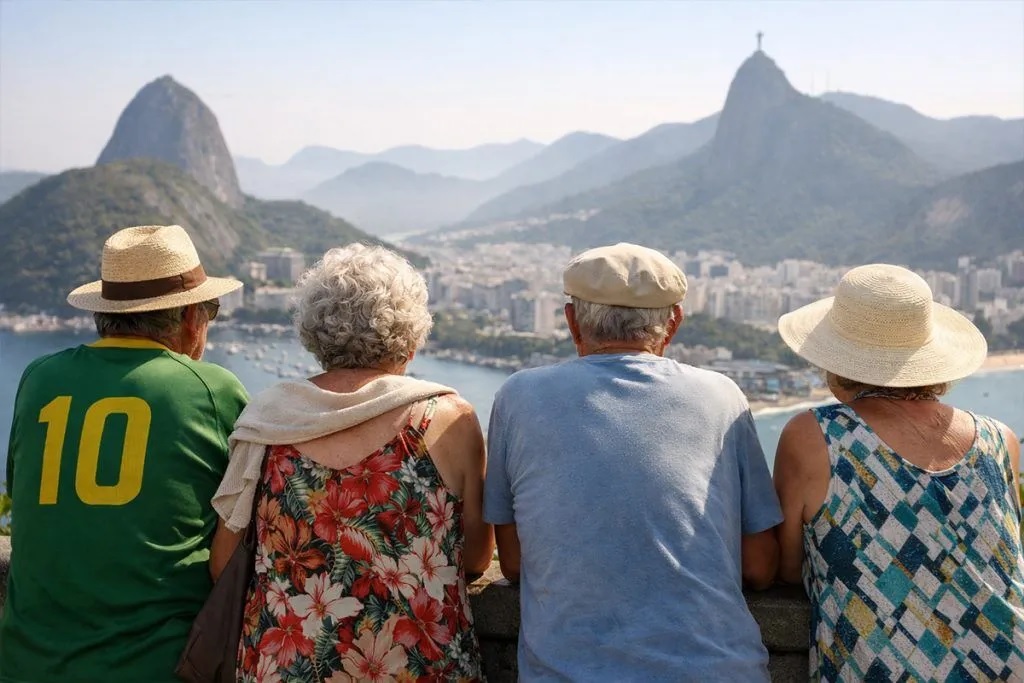
Brazil currently holds a unique global distinction: it has been home to the world’s oldest man, the oldest woman, and some of the most genetically diverse families on Earth. New research is now revealing that the secret to this extraordinary longevity may be woven into the country’s complex history of migration and survival.
The “Supercentenarian” Mystery
A recent longitudinal study focused on 160 Brazilian supercentenarians—individuals aged 110 or older. These seniors aren’t just living longer; they are remarkably resilient. Many survived severe bouts of COVID-19 before vaccines were even available, a feat that claimed the lives of much younger people worldwide.
According to Dr. Mayana Zatz of the Human Genome and Stem Cell Research Center at the University of São Paulo, the goal is to pinpoint the specific genetic factors that allow these individuals to defy biological odds.
A Tapestry of Ancestry
Why is Brazil a “hotspot” for longevity? The answer lies in its highly admixed population. Over centuries, Brazil has become a melting pot of:
- Portuguese colonizers (starting in 1500)
- Enslaved West Africans (roughly 4 million people brought in the 17th–19th centuries)
- European immigrants from Italy and Germany
- Japanese immigrants (resulting in the largest Japanese community outside of Japan)
This “complex tapestry” of DNA has created unique genomic patterns. Previous studies of Brazilians over age 60 discovered 2 million novel genetic variants that do not exist in other populations.
Rewriting Medical Rules
The study of these elders is already changing how we view “disease-causing” genes. For example, researchers found three women in their 90s who carried the BRCA1 mutation, which is typically associated with a high risk of breast cancer. However, none of these women ever developed the disease.
This suggests that their unique genetic background might contain “protector” genes that neutralize harmful mutations. These findings could revolutionize precision medicine, allowing doctors to offer more accurate genetic counseling and risk assessments.
The Call for Global Diversity
The study’s authors are urging the international scientific community to stop relying solely on European-descended data. To truly understand human health and aging, research must expand to include diverse, admixed populations like Brazil’s, where the keys to biological resilience are hidden in plain sight.
Share this:
- Click to share on WhatsApp (Opens in new window) WhatsApp
- Click to share on Facebook (Opens in new window) Facebook
- Click to share on X (Opens in new window) X
- Click to share on LinkedIn (Opens in new window) LinkedIn
- Click to share on Telegram (Opens in new window) Telegram
- Click to print (Opens in new window) Print
- Click to share on Tumblr (Opens in new window) Tumblr