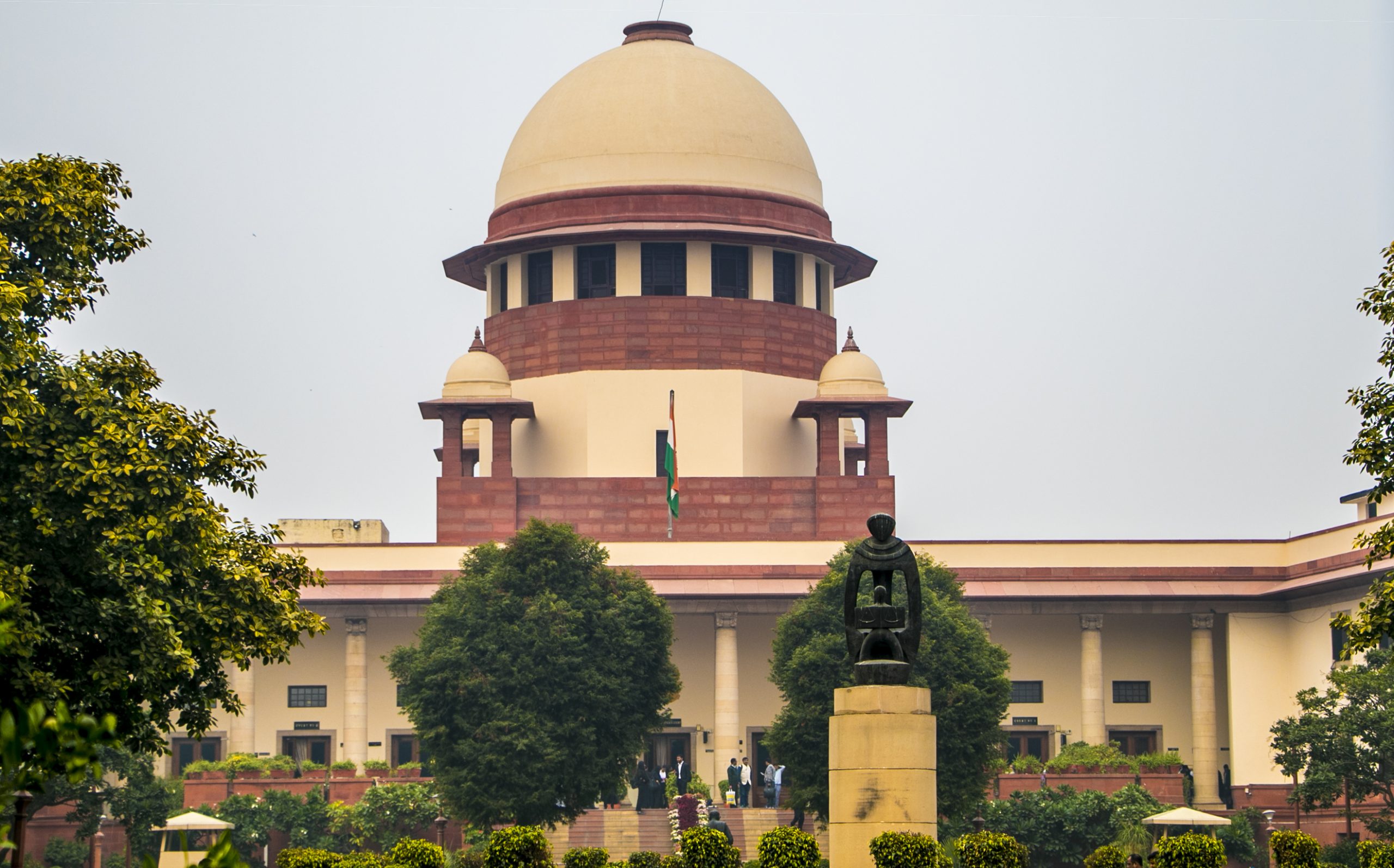
New Delhi, Feb 18: The Supreme Court on Tuesday set aside a controversial March 2025 judgment of the Allahabad High Court, which had held that grabbing a minor girl’s breasts and dragging her under a culvert did not amount to an attempt to rape, calling the ruling a result of a “patently erroneous application of the settled principles of criminal jurisprudence.”
At the same time, the court moved to address a broader concern regarding the lack of sensitivity and compassion in judicial handling of sexual offence cases, by requesting the National Judicial Academy, Bhopal, to constitute a committee of experts to frame comprehensive guidelines for judges and courts across the country.
The bench, led by Chief Justice of India Surya Kant and comprising justices Joymalya Bagchi and NV Anjaria, held that the high court had wrongly downgraded the charges from attempt to rape under Section 376 read with Section 511 of the IPC and Section 18 of the POCSO Act to lesser offences. Restoring the original summons issued by the special judge (POCSO), Kasganj, the court clarified that its observations were prima facie and would not affect the merits of the ongoing trial.
The high court had reasoned that the accused had merely “prepared” to commit rape and had not crossed into the stage of “attempt.” Rejecting this distinction on the facts of the case, the Supreme Court relied on settled principles explaining that “attempt” begins where “preparation” ends — when mens rea starts being executed.
The allegations, as recorded by the high court itself, showed that the accused took the minor on a motorcycle on the pretext of dropping her home, stopped near a culvert, dragged her, and committed sexually offensive acts, fleeing only after her screams attracted passersby.
“A bare perusal of these allegations leaves no modicum of doubt” that the accused had moved beyond preparation and had begun executing their intent, noted the bench, holding that a prima facie case for attempt to commit rape was clearly made out.
The suo motu proceedings had been initiated after senior advocate Shobha Gupta, founder of the NGO “We the Women of India,” wrote to the then Chief Justice flagging the high court’s reasoning as legally flawed and insensitive. The Supreme Court had earlier stayed the impugned observations as “insensitive and inhuman” and, in December 2025, stayed the entire judgment.
Broader push for sensitivity
Beyond correcting the legal error, the court turned to what it described as a systemic issue — the absence of compassion and empathy in some judicial pronouncements dealing with sexual offences, particularly those involving minors and vulnerable victims.
“The judicial system…must not only be grounded in the sound application of constitutional and legal principles but also foster an environment of compassion and empathy,” noted the bench, adding that the absence of either would prevent courts from properly performing their duties.
Underlining that earlier efforts to infuse sensitivity into judicial processes “have not borne the fruit that was expected,” the court said it was hesitant to frame fresh guidelines without the benefit of expert inputs and a comprehensive review of past initiatives.
Accordingly, it requested the National Judicial Academy, through its director and former Supreme Court judge Justice Aniruddha Bose, to constitute a five-member committee of experts. The committee, to be chaired by Justice Bose, will prepare a report titled: “Developing Guidelines to Inculcate Sensitivity and Compassion into Judges and Judicial Processes in the Context of Sexual Offences and other Vulnerable Cases.”
The court directed that the draft guidelines be written in simple, accessible language and not be “loaded with heavy, complicated expressions borne from foreign languages and jurisdictions.” They must be contextualised to Indian realities and understandable to laypersons, especially victims, many of whom are children or from vulnerable sections of society.
The committee has been asked to complete its work within three months and may consult linguists, prosecutors, social scientists, counsellors, and other domain experts. The report will be placed before the Chief Justice on the administrative side for further action.
The direction follows remarks made by CJI Kant on February 10, when he criticised the 2023 “Handbook on Combating Gender Stereotypes,” launched during the tenure of former CJI Dhananjaya Y Chandrachud, as being “too Harvard-oriented” and “too technical” for practical use by common people.
In December 2025, while continuing the stay on the Allahabad High Court judgment, the CJI-led Bench had expressed anguish that the required degree of sensitivity was “missing” at the high court level and indicated its inclination to frame comprehensive guidelines.
Share this:
- Click to share on WhatsApp (Opens in new window) WhatsApp
- Click to share on Facebook (Opens in new window) Facebook
- Click to share on X (Opens in new window) X
- Click to share on LinkedIn (Opens in new window) LinkedIn
- Click to share on Telegram (Opens in new window) Telegram
- Click to print (Opens in new window) Print
- Click to share on Tumblr (Opens in new window) Tumblr