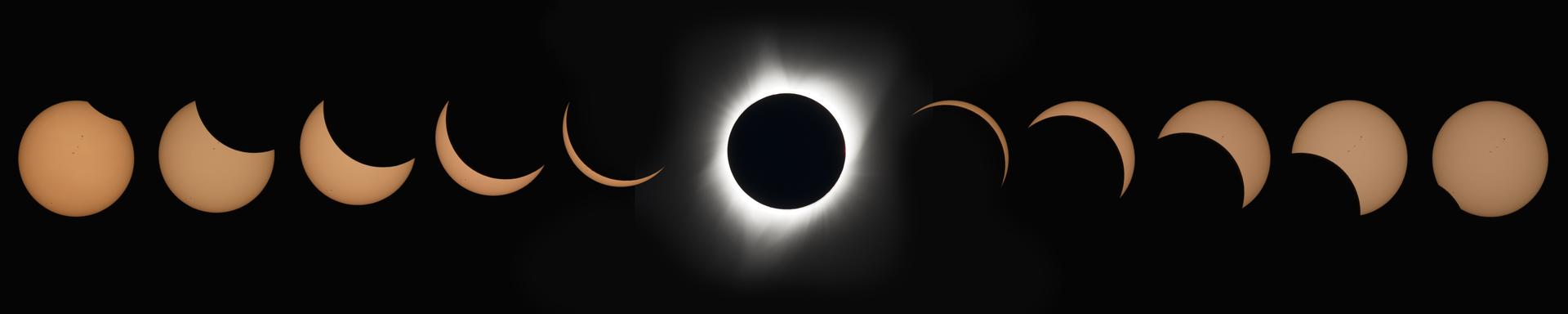
Washington DC, Jan 16: The first solar eclipse of 2026 will occur on February 17, creating an annular “ring of fire” effect where the Sun’s edges will be exposed in a red-orange hue. During this event, 96 per cent of the Sun’s centre will be eclipsed by the Moon for up to 2 minutes and 20 seconds, creating a stunning image that eclipse chasers crave desperately.
According to a report in Forbes, the celestial event will only be visible from the remote regions of Antarctica. Though the Feb 17 eclipse will be visible to very few people, it will start a series of three solar eclipses in 708 days. The second will be visible on Feb 6 when the ‘ring of fire’ will be visible across South American nations of Chile and Argentina, in addition to West Africa.
The third eclipse will take place on January 26, 2028, lasting 10 minutes and 27 seconds, visible from the Galapagos Islands, Ecuador and Brazil, ending at sunset in Spain.
What Is An Annular Solar Eclipse?
According to NASA, an annular solar eclipse takes place when the Moon passes between the Sun and Earth, when it is at or near its farthest point from Earth. As the Moon is farther away from Earth, it appears smaller than the Sun and does not completely cover the Sun.
As a result, the Moon appears as a dark disk on top of a larger, bright disk, creating what looks like a ring around the Moon.
Share this:
- Click to share on WhatsApp (Opens in new window) WhatsApp
- Click to share on Facebook (Opens in new window) Facebook
- Click to share on X (Opens in new window) X
- Click to share on LinkedIn (Opens in new window) LinkedIn
- Click to share on Telegram (Opens in new window) Telegram
- Click to print (Opens in new window) Print
- Click to share on Tumblr (Opens in new window) Tumblr