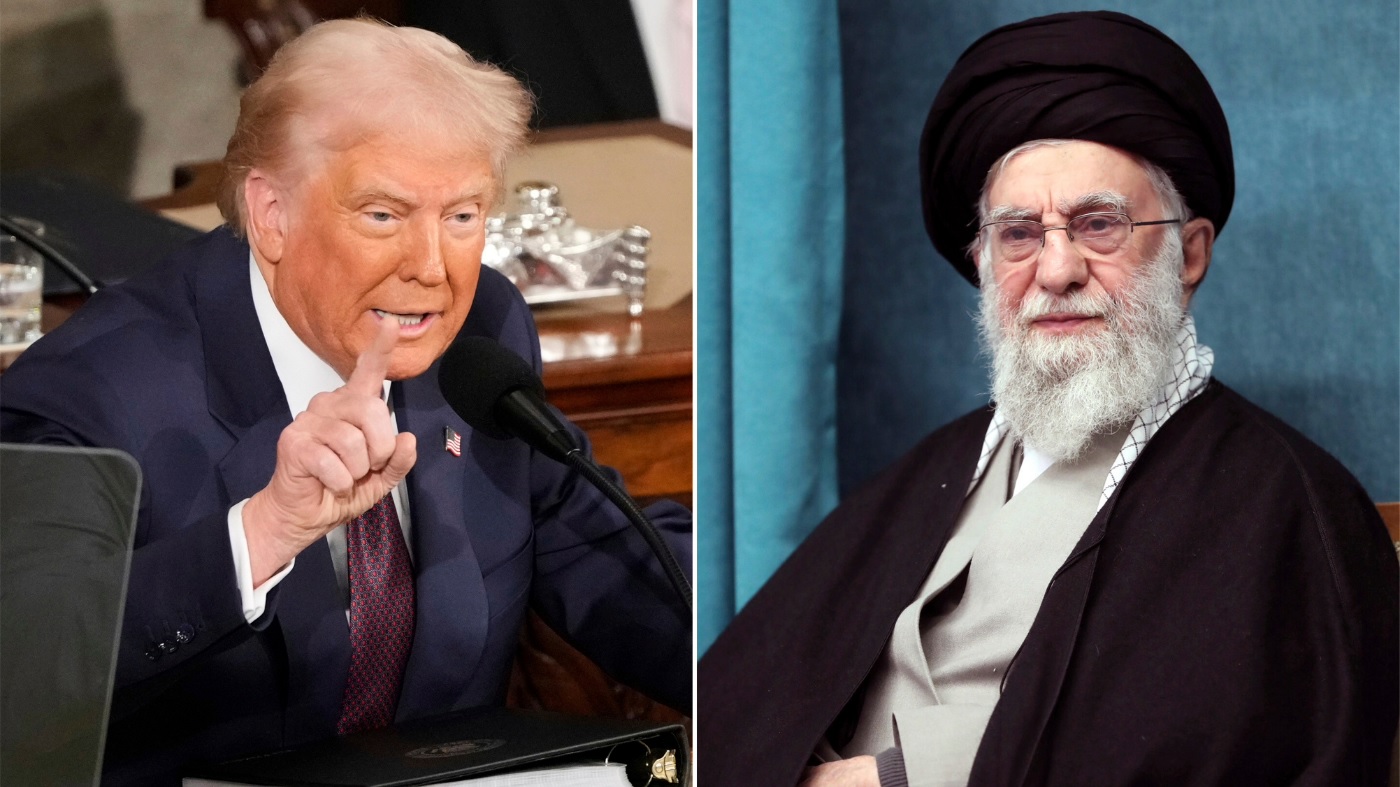
Washington/ Muscat, Feb 6: US President Donald Trump said Iran’s Supreme Leader Ayatollah Ali Khamenei should be “very worried” as both countries prepare to hold nuclear talks in Oman, following a US strike on Tehran’s nuclear facilities last year.
Iranian Foreign Minister Abbas Araghchi announced that the meeting will begin at 10:00 local time (06:00 GMT) in Muscat. The negotiations come after weeks of heightened tensions between the two countries.
The US delegation is expected to include West Asia envoy Steve Witkoff and possibly former White House adviser Jared Kushner. The discussions take place against a backdrop of tensions in US-Iran relations, which escalated after a 12-day conflict involving Israel in June 2025, during which US forces bombed key Iranian nuclear facilities in Fordow, Isfahan.
Trump has bolstered US forces in the region and threatened military action if Iran does not agree to a deal on its nuclear program and cease targeting protesters. Asked if Khamenei should be worried, Trump told NBC News on Wednesday: “I would say he should be very worried.”
Araghchi expressed gratitude to Omani authorities for facilitating the talks. The Iranian Foreign Ministry said the negotiations would be conducted “with authority” and aim for a “fair, mutually satisfactory, and honorable understanding” on the nuclear issue. However, Tehran emphasized that past experiences with the US continue to shape its diplomatic approach.
“At all times, we consider ourselves obliged to demand the rights of the Iranian nation,” said Foreign Ministry spokesperson Esmaeil Baghaei. He added that Iran also seeks to use diplomacy to secure national interests and safeguard regional peace and stability.
The talks come amid escalating tensions following a deadly crackdown on anti-government protests in Iran, which prompted the US to send a military “armada” to the region and threaten strikes. Iran has warned that any attack would trigger an immediate response against US forces and assets in the area.
According to Iran’s state-run Press TV, the country has deployed its “most advanced long-range ballistic missile, the Khorramshahr 4,” at an undisclosed Revolutionary Guard underground site. The missile reportedly has a range of over 1,240 miles and can carry a 3,300-pound warhead.
The US aims to expand the scope of the talks beyond Iran’s nuclear program to include its ballistic missile development, sponsorship of regional militant groups, and domestic human rights issues, according to Secretary of State Marco Rubio.
Trump, in an NBC News interview, defended last year’s US strike on Iranian nuclear sites, saying it prevented further escalation in the Middle East. “If we didn’t take out that nuclear, we wouldn’t have peace in the Middle East, because the Arab countries could have never done that,” he said. He added that the US has learned Iran is attempting to revive its nuclear program at alternative locations, but US intelligence and military readiness would prevent it.
On Tuesday, a US aircraft carrier shot down an Iranian drone that approached aggressively in the Arabian Sea. Hours later, two Iranian Revolutionary Guard gunboats threatened a US-flagged tanker in the Strait of Hormuz.
Trump first threatened military action last month during nationwide anti-government protests in Iran and a near three-week internet blackout.
The high-stakes talks in Muscat are closely watched by regional and global powers, with neighboring countries mediating to prevent a wider conflict that could destabilise the Middle East.
Share this:
- Click to share on WhatsApp (Opens in new window) WhatsApp
- Click to share on Facebook (Opens in new window) Facebook
- Click to share on X (Opens in new window) X
- Click to share on LinkedIn (Opens in new window) LinkedIn
- Click to share on Telegram (Opens in new window) Telegram
- Click to print (Opens in new window) Print
- Click to share on Tumblr (Opens in new window) Tumblr