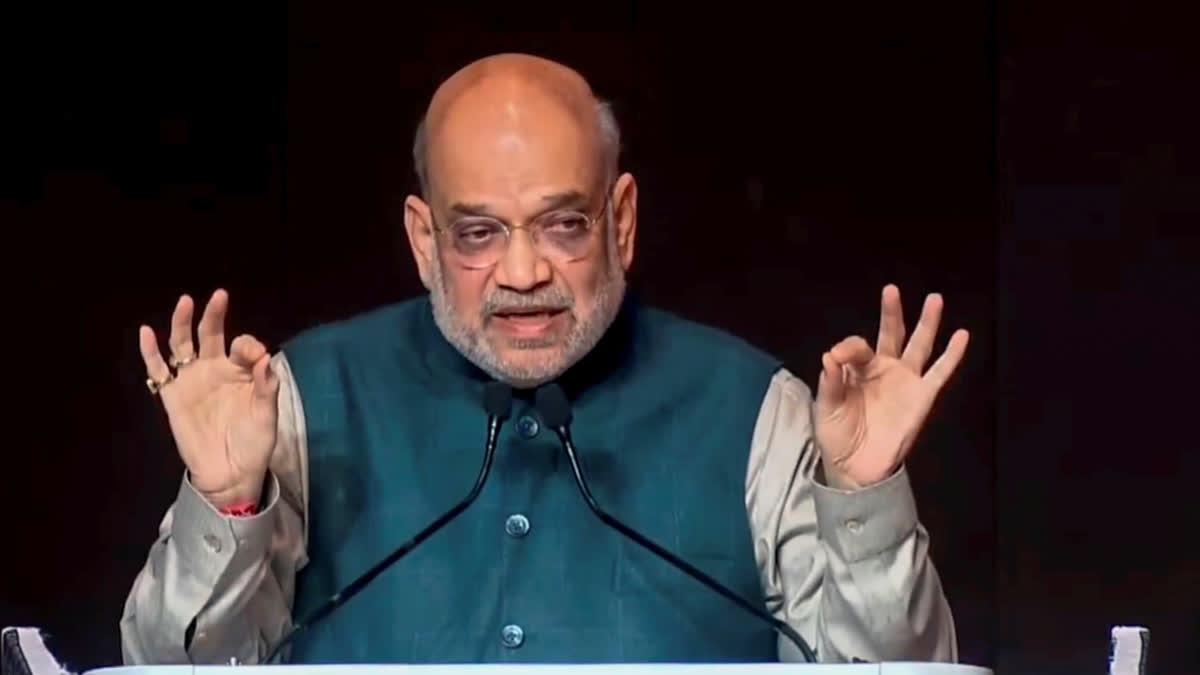
NEW DELHI: In a stern message on internal security and border control, Union Home Minister Amit Shah declared that India is “not a dharamshala” (a charitable rest house) and emphasized that only legitimate citizens hold the right to reside in the country. Delivering the valedictory address at the Intelligence Bureau’s 9th National Security Strategies Conference in New Delhi, Shah unveiled a long-term security blueprint designed to prepare the nation for its centenary of independence in 2047. Addressing over 850 top officials, including state police chiefs and intelligence heads, he asserted that robust internal security is the fundamental prerequisite for Prime Minister Narendra Modi’s vision of a fully developed nation.
Framing illegal infiltration as a severe multi-dimensional threat affecting India’s security, economic stability, and demographic balance, Shah promised that the government is aiming to make the nation “infiltrator-free in a short span of time”. He highlighted that the Home Ministry has spent the last eight months consulting with land-border states to formulate a dedicated four-pronged border security document aimed at completely halting illegal entry. While emphasizing that legal visitors coming to contribute to the nation’s growth are welcome, Shah made it clear that unauthorized intrusion would be tackled with uncompromising enforcement.
Beyond border management, the security blueprint directs intelligence and law enforcement agencies to project potential national security challenges 15 to 20 years into the future. Shah instructed authorities to build Standard Operating Procedures to combat modern and emerging threats, such as drone strikes, digital misinformation warfare, supply chain disruptions, and cyber operations. He also urged agencies to leverage Artificial Intelligence alongside data integrated from key platforms—including the Crime and Criminal Tracking Network & Systems (CCTNS), NATGRID, Inter-operable Criminal Justice System (ICJS), and National Automated Fingerprint Identification System (NAFIS)—to identify criminal tactics and generate actionable intelligence.
The Home Minister also mandated aggressive timelines for legal and counter-terrorism measures, setting a one-year deadline for the full nationwide implementation of India’s three new criminal laws. Under this framework, the government aims to cap the entire trial process—from initial registration to final disposal in the Supreme Court—at three years while boosting overall conviction rates by 25 percent. Reaffirming the “Detect, Disrupt, and Destroy” strategy against drug syndicates, Shah called for aggressive action under anti-terror schemes, greater use of trial-in-absentia provisions against foreign-based fugitives, and tight coordination to eliminate remaining national security hotspots.