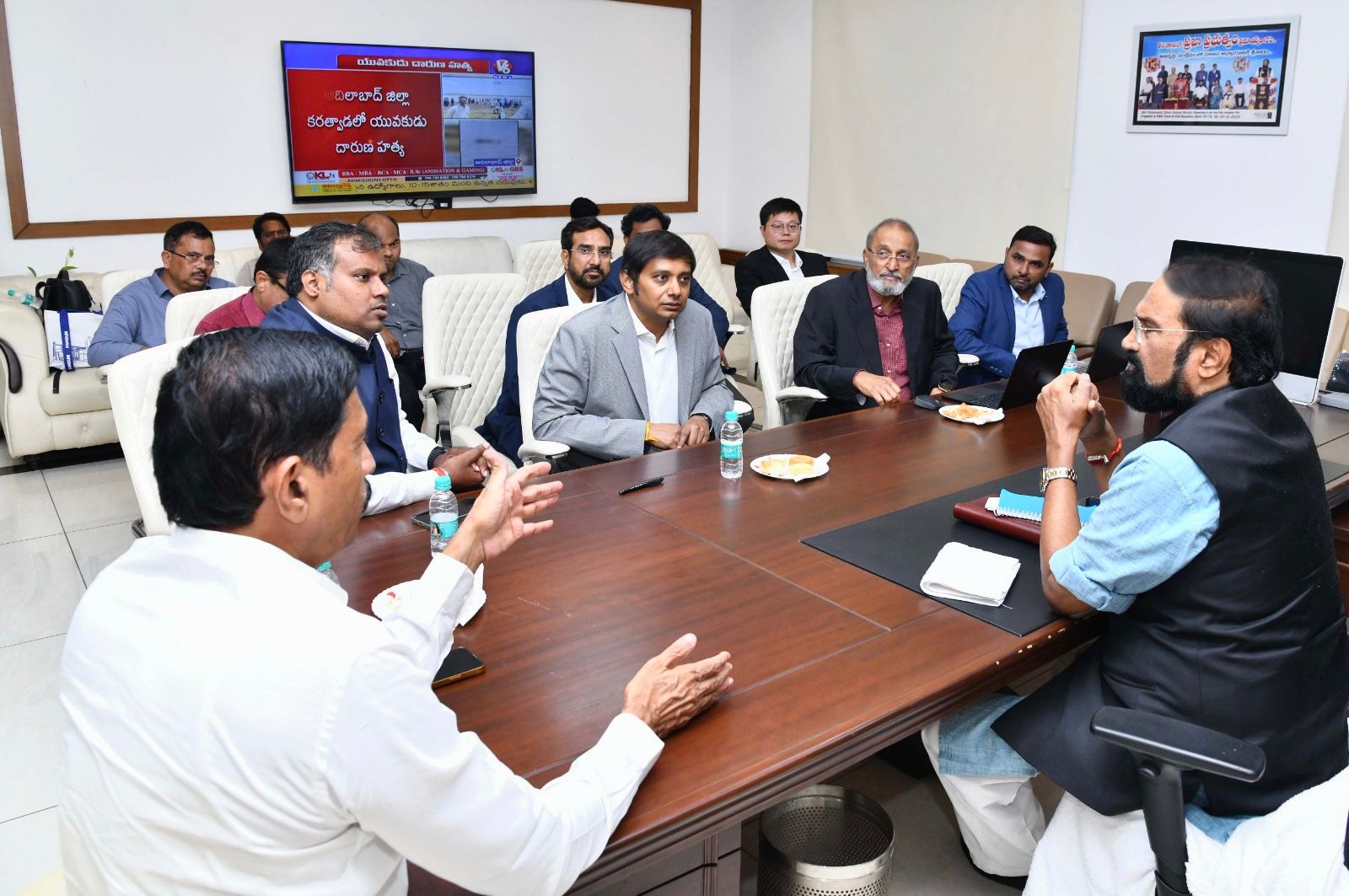
Hyderabad: Telangana government is preparing to modernise its paddy storage infrastructure with plans to establish state-of-the-art grain silos at 20 locations across 10 major paddy-producing districts, Irrigation and Civil Supplies Minister N. Uttam Kumar Reddy announced during a meeting with representatives of leading grain storage and logistics companies on Friday. The silo network proposed initially with a gross storage capacity of 50,000 metric tonnes, will function in addition to the existing procurement and storage infrastructure.
Strengthening post-harvest management
It is aimed at strengthening post-harvest management, reducing storage losses and improving the efficiency of grain movement across the state. While making it clear that the new system would complement—not replace—the existing procurement ecosystem, the Minister wanted the cost involved to be worked out before taking the final call on the new technology. The Self-Help Groups (SHGs) operating IKP procurement centres and Primary Agricultural Cooperative Societies (PACS), which have played a crucial role in Telangana’s paddy procurement operations, will continue to have a significant role in procurement and grain management activities.
The proposal was discussed during a detailed presentation by representatives FAMSUN Storage Engineering Company Limited’s grain silo technology division. The delegation outlined modern grain handling systems that integrate automated storage, digital monitoring and dedicated logistics infrastructure.
Automation to Address Labour Shortages
During the presentation, company representatives explained how modern silo systems automate the entire grain handling process—from intake and quality testing to storage and dispatch. The mechanised unloading systems would help address the growing challenge of manpower shortages, particularly during the peak Rabi procurement season in April and May when extreme heat wave conditions often affect labour availability.
Under the proposed model, incoming grain is sampled, tested and digitally approved before unloading. Mechanised systems then transfer grain into storage facilities, eliminating much of the manual handling currently involved in procurement operations.
The technology can reduce vehicle turnaround time from several days to nearly one hour, significantly easing congestion at procurement and storage centres.
Digital Monitoring for Safe Storage
The companies showcased technology-driven storage solutions in which grain remains under continuous monitoring through digital sensors that track temperature, moisture and storage conditions. Automated aeration systems and scientific pest management practices help preserve grain quality for extended periods while minimising storage losses.
Similar quality-control measures are followed at destination terminals before grain is bagged and dispatched through the Public Distribution System (PDS) or open market channels. Representatives described the model as an integrated supply chain designed to protect grain “from harvest to household.”
Rail Connectivity and End-to-End Logistics
A key feature of the proposed infrastructure is its integration with dedicated railway connectivity. The companies explained how grain can be moved seamlessly from procurement centres in surplus-producing regions to consumption centres across the country through technology-enabled logistics systems. Dedicated rail-linked terminals would facilitate faster movement while preserving grain quality throughout the transportation process.
The logistics chain includes storage, handling and dispatch facilities designed to maintain grain quality at every stage of movement.
Bangladesh Silo System Cited as Model
During the discussions, representatives highlighted modern paddy storage infrastructure developed in Bangladesh as a successful example of large-scale grain management. The Bangladesh model, comprising multiple modern storage facilities with a combined capacity of about 150,000 tonnes, was cited as demonstrating how scientific drying and storage systems can preserve grain safely for extended periods.
Technology Support
Representatives of FAMSUN Storage Engineering Company Limited, including Grain Silo Technology division, offered to provide technical expertise and advanced storage solutions for Telangana’s proposed modernisation programme. They outlined their involvement in grain storage infrastructure and referred to their association with large-scale silo projects developed for the Food Corporation of India (FCI). They explained how India’s modern silo programme has expanded significantly since its initial rollout in 2016.
Detailed Plans Sought
Minister Uttam Kumar Reddy directed the companies to submit detailed proposals identifying suitable locations, storage capacities and implementation strategies for the proposed silo network across Telangana’s major paddy-producing districts.
He said the government would examine the proposals as part of its broader efforts to strengthen procurement, storage and distribution systems while ensuring that farmers continue to receive seamless procurement services through the existing network of SHGs, IKP centres and PACS.